
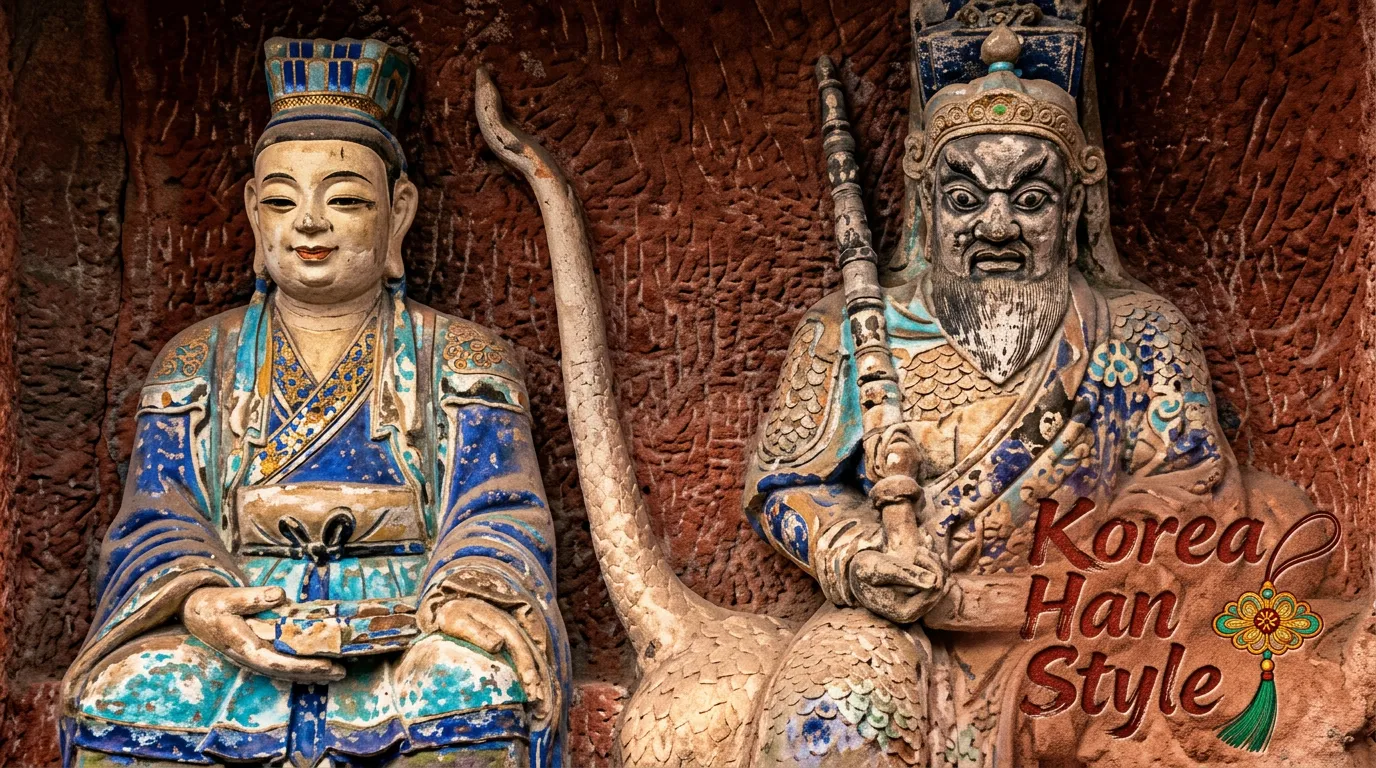
The Han Dynasty, (206 BC – 220 AD) represents one of the most influential periods in Chinese history. The era not only marked advancements in technology, administration, and trade but also witnessed the flourishing of religious and spiritual life. Han society embraced a dynamic blend of Confucianism, Taoism, and folk religion, shaping daily life, governance, and cultural practices.
Confucianism as the Moral Foundation
- Dominated political and social structures of the Han Dynasty.
- Rulers promoted loyalty, morality, and social responsibility based on Confucian teachings.
- People followed strict respect for ancestors, hierarchical family roles, and harmonious interactions within the community.
- Officials and scholars incorporated Confucian principles into government rituals, education, and legal systems.
- Ensured stability and order across the empire.
Taoism and the Pursuit of Harmony
- Flourished as a spiritual path emphasizing harmony between humans and nature.
- Practitioners sought longevity and spiritual insight through meditation, herbal medicine, and rituals.
- People consulted Taoist priests for guidance, protection, and solutions to natural or supernatural challenges.
- Taoist beliefs added a mystical dimension to daily life.
- Helped society understand natural phenomena while encouraging moral and spiritual growth.
Folk Religion and Community Rituals
- Thrived among ordinary citizens.
- Families worshipped ancestors, local deities, and supernatural forces for health, prosperity, and protection.
- Religious festivals and offering ceremonies strengthened community bonds and social cohesion.
- Integrated spiritual practices into agriculture, trade, and household life.
- Demonstrated that religion shaped both practical and sacred aspects of society.
The Arrival of Buddhism
- Entered China from India along the Silk Road late in the Han period.
- Early adoption remained limited but gradually influenced Chinese religious thought.
- Introduced new spiritual concepts.
- Merged with existing traditions over time.
- Enriched the religious landscape and set the stage for centuries of spiritual development.
Religion as a Pillar of Han Society
Religion during the Han Dynasty, acted as more than ritual; it served as a pillar of morality, social structure, and governance. Han people sought balance between material life and the spiritual realm, integrating faith into everyday activities. Understanding religious practices during this era offers valuable insights into the values, beliefs, and cultural identity of ancient China.

Leave a Reply