
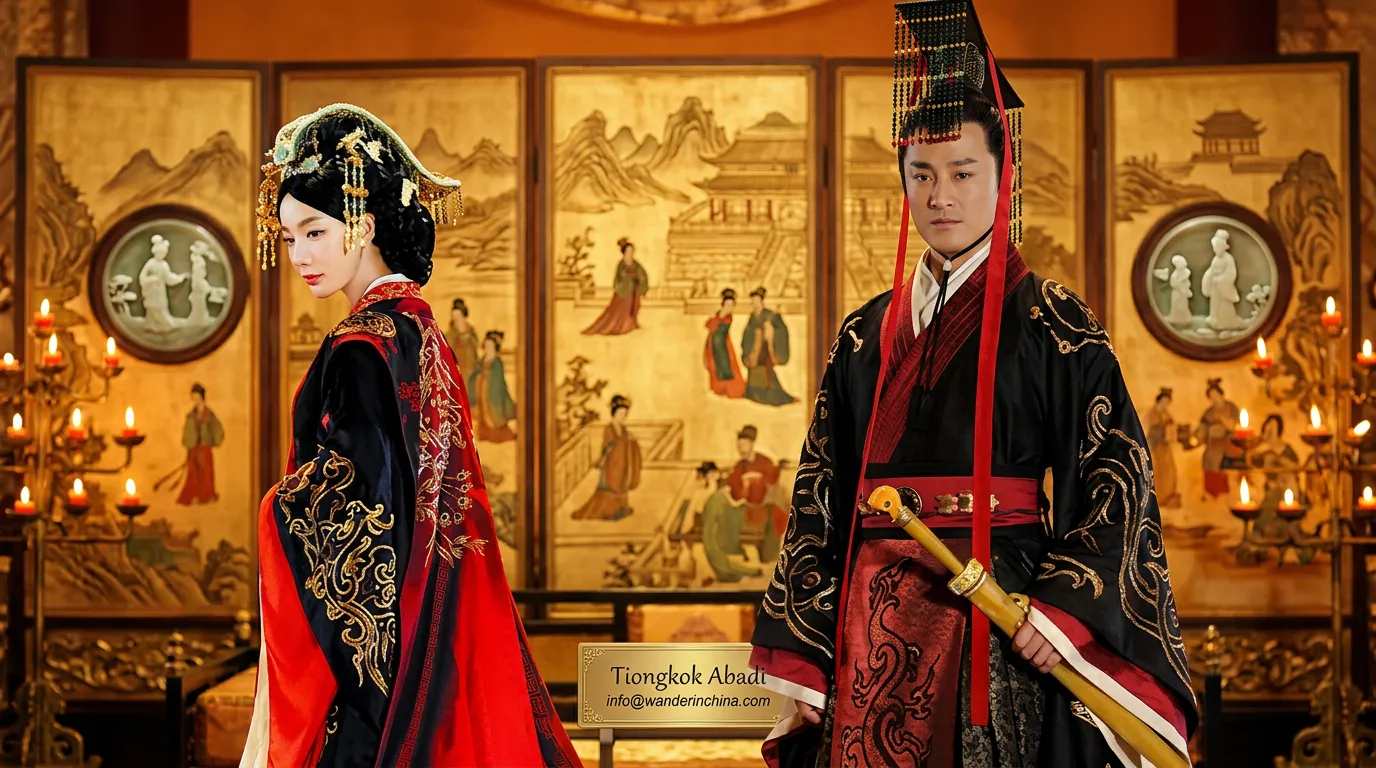
The clothing industry, during the era of the Dinasti Han played a crucial role in shaping ancient China’s economy, culture, and global trade influence. This period transformed clothing from a basic necessity into a powerful symbol of social identity, economic strength, and political authority. Strong governance and economic stability encouraged rapid growth in textile production and innovation.
Early Growth of the Textile Industry
At the beginning of the Han Dynasty, authorities actively promoted textile production as a key economic sector. The government organized silk and fabric manufacturing through structured systems that improved efficiency and output. Craftsmen refined weaving techniques and produced higher-quality fabrics compared to earlier periods.
Silk quickly gained value as the most prestigious material in society. Producers expanded silk manufacturing to meet rising domestic demand and growing international interest. Traders distributed silk across regions, and this expansion connected China with distant markets through early trade networks.
Technological Innovation and Production Expansion
Technological progress drove the rapid expansion of the clothing industry. Weavers improved loom designs to increase weaving speed and fabric precision. These improvements allowed artisans to produce textiles in larger quantities without sacrificing quality.
Dyeing techniques also advanced significantly. Craftsmen used natural dyes from plants and minerals to create vibrant and long-lasting colors. These innovations helped the textile industry diversify its products and attract wider markets.
The government strengthened production systems by establishing controlled workshops. These workshops set strict quality standards and encouraged consistent output. As a result, textile production grew more organized, efficient, and reliable across the empire.
Social Meaning and Cultural Identity of Clothing
Clothing during the Dinasti Han reflected more than just practical needs. Society used clothing to express social hierarchy and cultural values. Nobles wore silk garments to display wealth and political status, while common people wore simpler fabrics such as hemp and cotton blends.
Clothing also reinforced Confucian values such as order, respect, and social structure. Every detail in dress style, color choice, and fabric quality communicated a person’s rank and role in society. This system strengthened social organization and cultural identity across the empire.
Trade Expansion and Global Influence
The clothing industry fueled international trade growth during the Han Dynasty. Silk emerged as one of the most valuable trade goods in the ancient world. Merchants transported silk along long-distance trade routes that later became known as the Silk Road.
These trade routes connected China with Central Asia, the Middle East, and Europe. Chinese silk attracted strong demand from foreign markets and increased the empire’s wealth and influence. As trade expanded, China strengthened its position as a global leader in textile production.
Conclusion
The clothing industry during the era of the Dinasti Han, shaped economic development, cultural identity, and international trade. Innovation in weaving technology, organized production systems, and expanding trade networks all supported the rise of the silk industry. This legacy continues to influence modern textile and fashion industries, proving the long-lasting impact of Han Dynasty innovation in global history.

Leave a Reply