
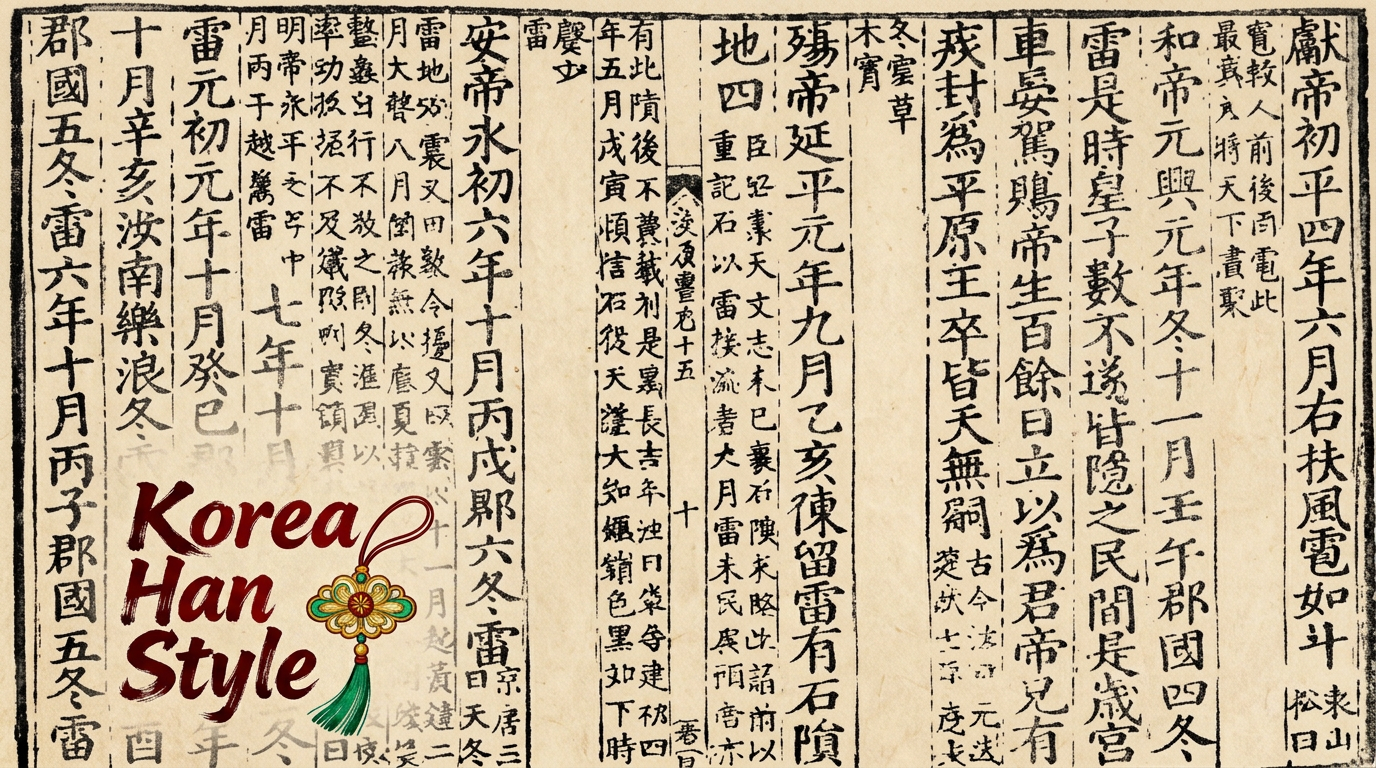
The Hanshu (Book of Han) stands as one of the most important literary and historical works from the Han Dynasty (206 BCE – 220 CE). Ban Gu wrote this text to document the history of the Western Han Dynasty in a clear and organized form.
1. Purpose of Hanshu
Ban Gu wrote the Hanshu to record political events, imperial actions, and government systems. He aimed to continue the historical tradition started by Sima Qian in the Shiji. He focused on accuracy and structure to help readers understand the rise and development of the Han state.
2. Structure and Content
The Hanshu divides its content into several sections:
- Imperial annals that describe the reigns of emperors
- Biographies of important officials, scholars, and historical figures
- Treatises that explain law, economy, astronomy, and rituals
- Tables that organize historical data and timelines
This structure helps readers follow events in a logical and systematic way.
3. Writing Style
Ban Gu uses a formal and precise writing style. He presents facts clearly and connects events with political and moral lessons. He also compares different rulers and officials to show their strengths and weaknesses.
4. Historical Importance
The Hanshu strengthens the tradition of Chinese historiography. It provides detailed information about the Western Han Dynasty and supports Confucian values in governance. Later historians use it as a key reference for studying ancient China.
Conclusion
The Hanshu plays a central role in Han Dynasty literature. Ban Gu creates a structured historical record that explains politics, society, and culture in the Han era. The work sets a standard for official Chinese historical writing for centuries.
Leave a Reply