
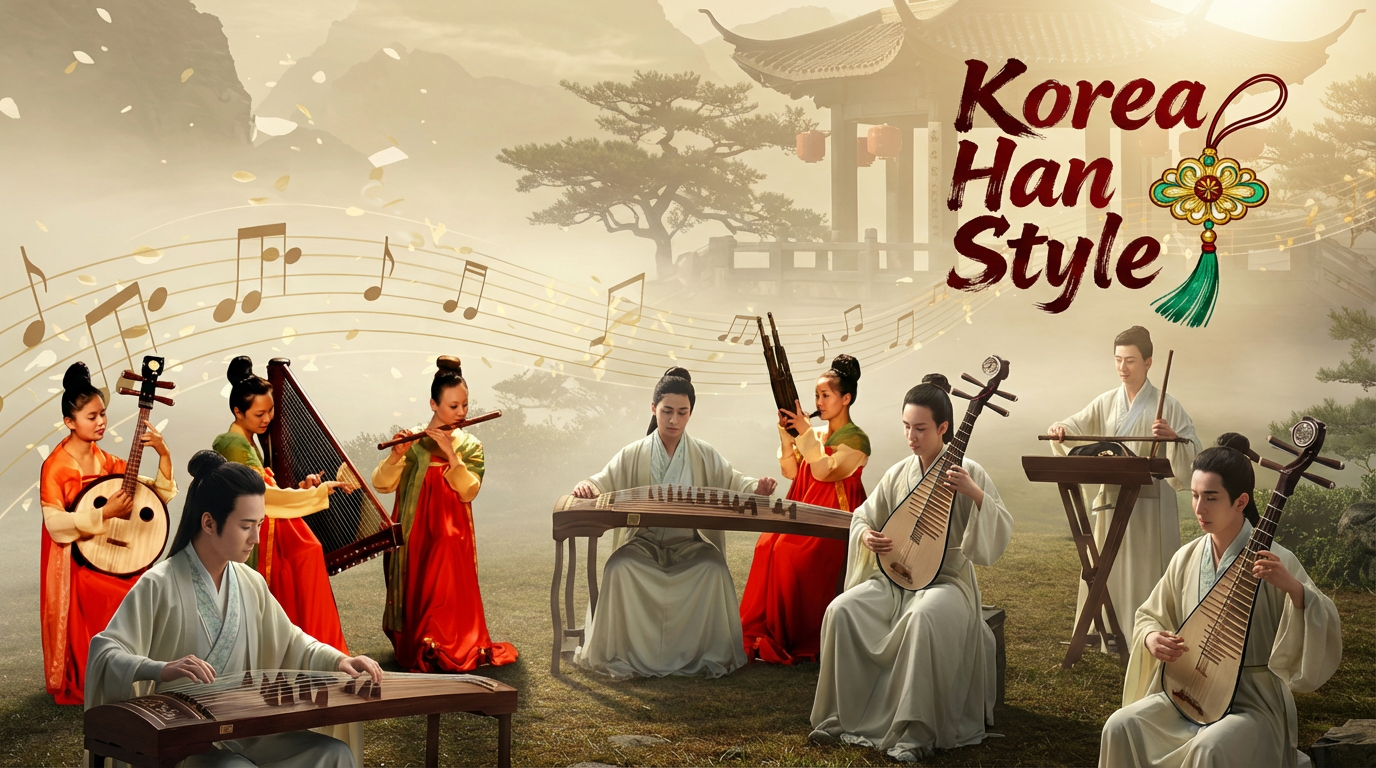
The Han Dynasty (206 BC – AD 220) is renowned not only for its political and economic achievements but also for its vibrant cultural life. Music in the Han era was far more than entertainment it played an essential role in court rituals, social life, and philosophical teachings. The period laid the foundation for the evolution of traditional Chinese music.
Music and State Rituals
Music in the Han Dynasty, was deeply tied to governance and social order. The imperial court believed that music reflected the harmony between heaven and earth, and it accompanied state ceremonies, religious rituals, and ancestral worship. Court music was often performed with symbolic dance and gestures, emphasizing its role in promoting social cohesion.
The Han government established the Yuefu Music Bureau, tasked with collecting folk songs from across the empire. This helped preserve regional melodies and integrate them into formal court traditions.
Instruments Flourish Under Han Patronage
The Han period saw the refinement and popularization of many instruments. Key examples include:
- Guqin: A seven-string zither that became highly sophisticated during this period.
- Bronze bells (zhong): Used in both ceremonial and spiritual contexts.
- Wooden flutes and wind instruments: Added tonal variety to court music.
- Drums: Provided rhythm for dances and performances.
These instruments not only enriched the soundscape but also became symbols of status, spirituality, and artistic skill.
Timeline of Key Musical Developments in the Han Dynasty
| Period / Event | Musical Development | Impact |
|---|---|---|
| Early Han (206–140 BC) | Standardization of ritual music in the court | Reinforced harmony and authority |
| Mid-Han (140 BC–9 AD) | Establishment of the Yuefu Music Bureau | Collection of folk songs from various regions |
| Late Han (25–220 AD) | Popularization of instruments like guqin, bells, flutes | Integration of folk and court music |
| Throughout Han | Folk tunes incorporated into court performances | Broadened cultural influence of music |
Folk Music Meets Court Tradition
One of the most remarkable aspects of Han music was the blending of folk and elite traditions. Regional songs collected by the Yuefu were adapted for court performances, creating a dynamic interaction between rural and urban musical cultures. This integration helped preserve folk traditions while also enriching the artistic repertoire of the court.
Examples of Han musical functions include:
- Ritual and ceremonial music: To mark official and religious events.
- Court entertainment: Showcasing skill and sophistication for nobles and dignitaries.
- Folk music collection: Preserving local songs and cultural identity.
Legacy and Influence Beyond Han
The Han Dynasty’s musical developments had lasting effects on Chinese culture:
- Standardization of music theory and notation influenced later dynasties.
- The refinement of instruments like guqin set the stage for centuries of classical music.
- The Yuefu’s folk song collection created a foundation for Chinese poetry and lyrical traditions.
Even centuries later, the Han era is celebrated for turning music into a tool of social harmony, spiritual expression, and cultural identity.
Conclusion
The development of music in the Han Dynasty exemplifies how art can reflect and shape society. Through institutional innovation, instrumental refinement, and the fusion of folk and court traditions, Han music created a lasting legacy. Today, its influence is still visible in traditional Chinese music, demonstrating the timeless power of melody, rhythm, and harmony.

Leave a Reply